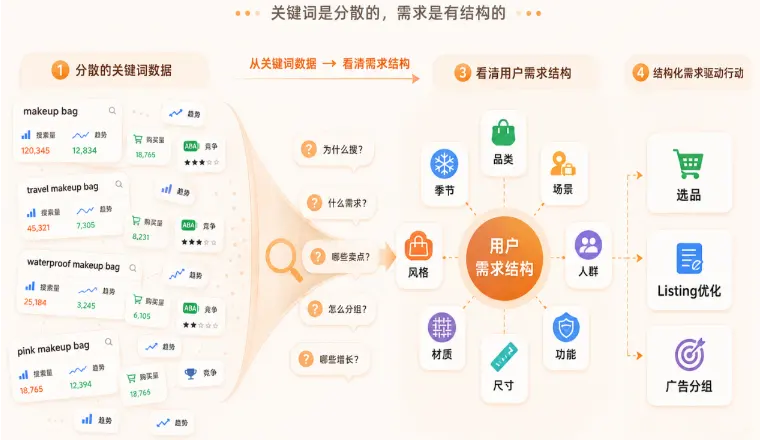
Mastering Amazon Keyword Optimization Techniques and Methods | Keyword Research
You can use tools such as Amazon's search suggestions, Google Keyword Planner, and SEMrush to find relevant keywords.

Long-tail keywords refer to relatively long keyword phrases, which typically contain three or more words.
Sellers can use brand names and distinctive keywords in product titles and descriptions to improve keyword ranking. For example, if a seller is selling a specialty coffee, they can use coffee-related keywords in the title and description, such as "handmade roasted" or "direct from the source."
Keyword stuffing refers to the excessive use of keywords on product pages and descriptions, a practice that may be penalized by Amazon. Therefore, sellers need to avoid keyword stuffing and instead distribute keywords appropriately across product titles, descriptions, selling points, and search terms.
Finally, sellers need to update their keywords regularly. Amazon's search algorithm is constantly changing, so sellers need to pay attention to the latest search trends and algorithm changes, and update their keywords accordingly. Tools such as Google Trends and MerchantWords can be used to understand the latest search trends.
The above are some tips and methods for Amazon keyword optimization. Sellers can research competitors' keywords, use long-tail keywords, leverage brand names and unique terms, avoid keyword stuffing, and update keywords regularly. Only by continuously optimizing and improving their keyword optimization strategies can sellers achieve better exposure and sales for their products on Amazon.