Amazon Best Sellers Rank explained for comparing product demand
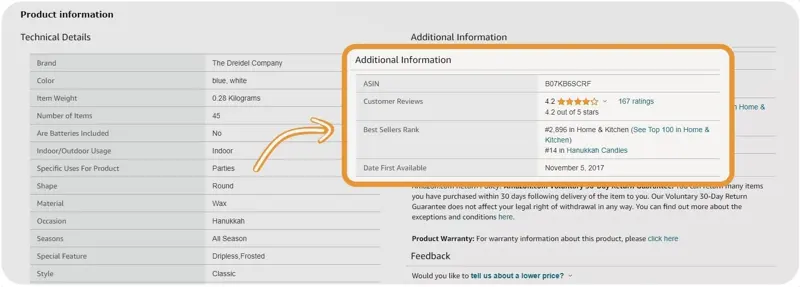
Best Sellers Rank is a relative measure within an Amazon category. A lower rank indicates a stronger position in that category, while the same number can imply very different unit volumes elsewhere.

Record the category with the rank
An ASIN can show rankings in more than one category or subcategory. Save the exact category and marketplace before comparing it with another product. Do not infer that equal ranks in Books and Home represent equal sales.
Review repeated observations
Look at a sequence of ranks alongside price and stock history. Promotions or a temporary stockout can make an isolated observation less representative. Estimates derived from rank help compare demand ranges, while the seller’s order data is the stronger reference for actual units sold.